
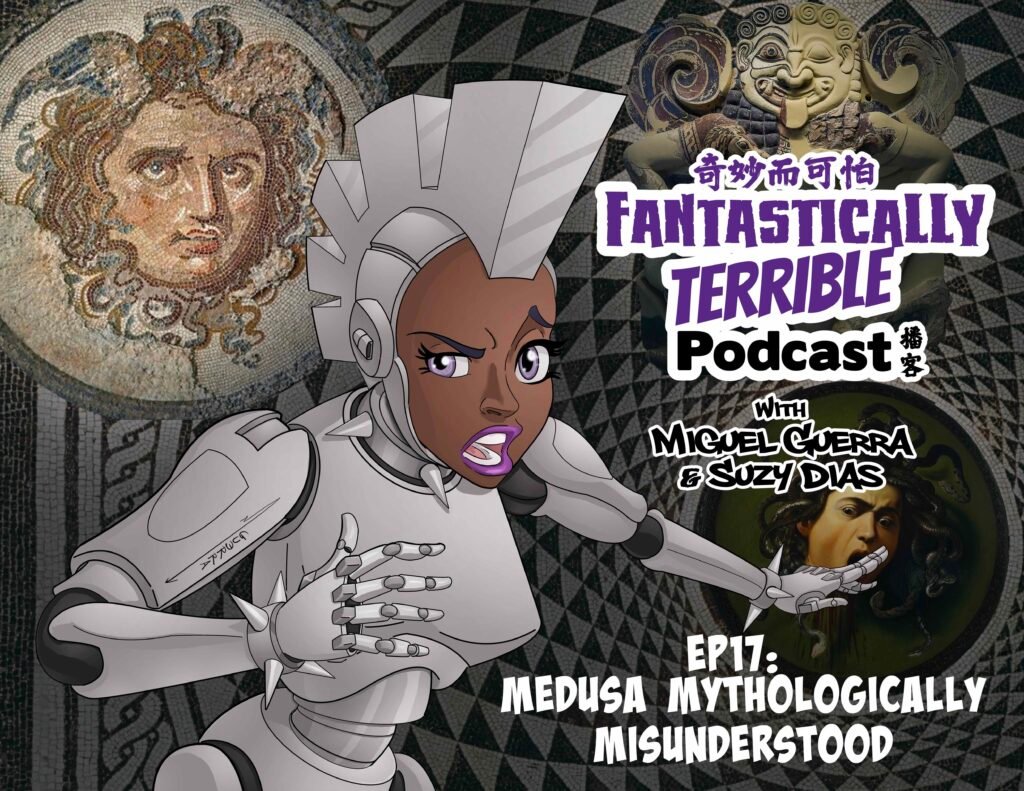
Fantastically Terrible Podcast Ep17: Medusa Mythologically Misunderstood
Listen here…
🎬 YouTube https://www.youtube.com/7Robotsinc
🎤︎︎ SoundCloud https://soundcloud.com/7robotspodcast
🎧◝(^⌣^)◜ If you enjoyed the show, give us a LIKE and SUBSCRIBE! We truly appreciate our listeners. After all, you don’t have to be here, but you came anyway. So, Hi! Ain’t the universe amazing?
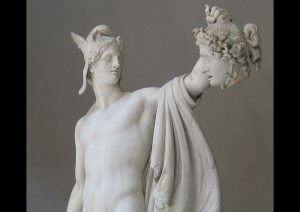
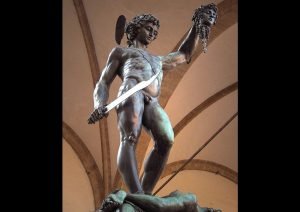
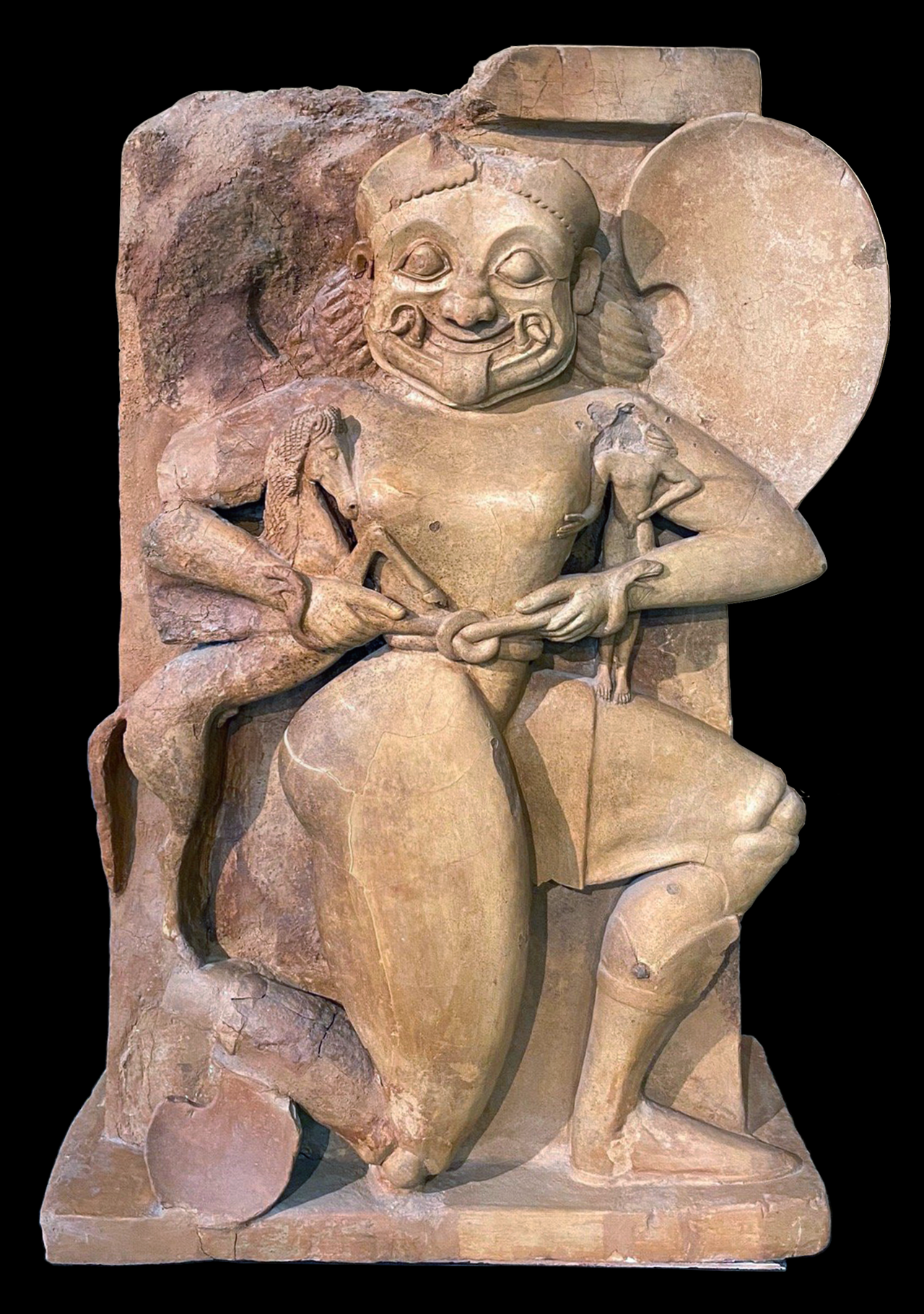

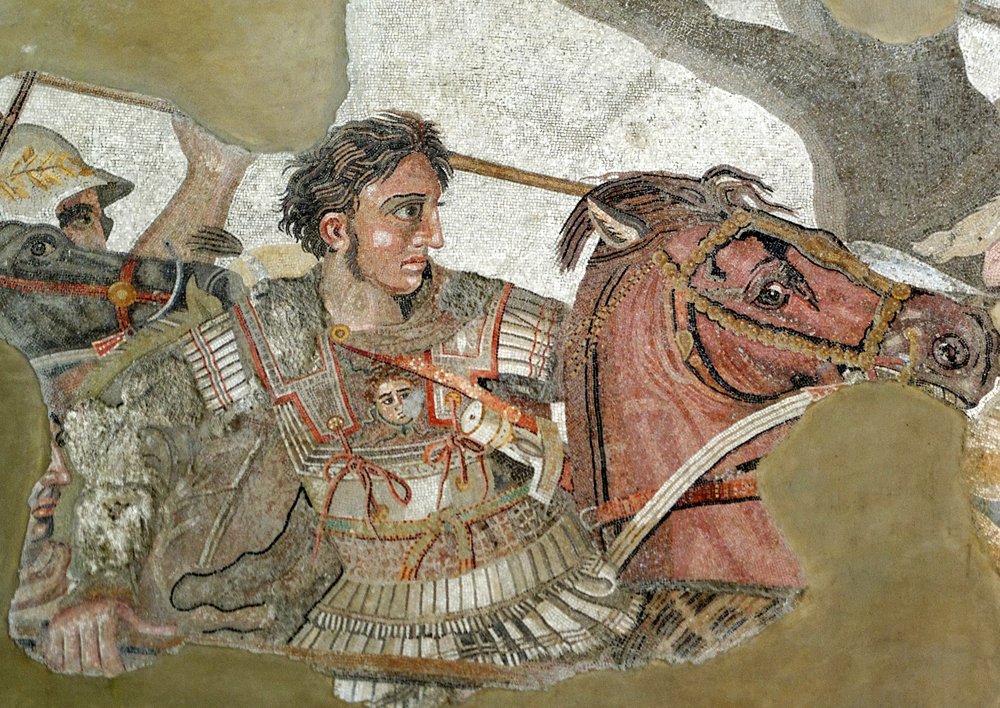
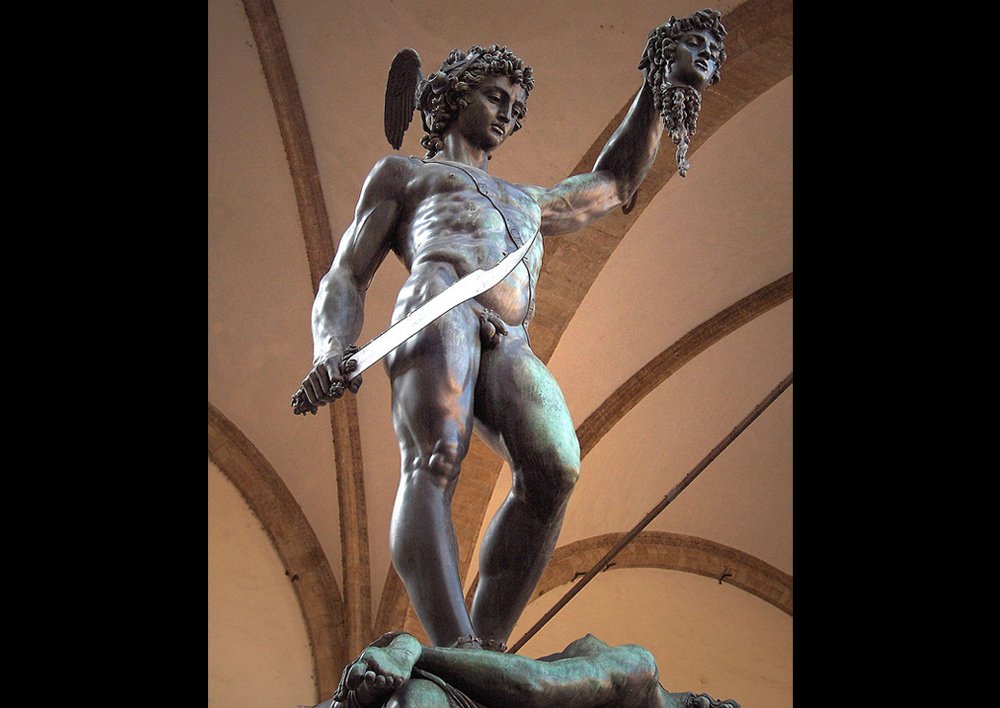
“We have already spoken of Medusa and of the powers of her blood to render both life and death. We may now think of the legend of her slayer, Perseus, by whom her head was removed and presented to Athene. Professor Hainmond assigns the historical King Perseus of Mycenae to a date c. 1290 B.C., as the founder of a dynasty, and Robert Graves–whose two volumes on “The Greek Myths” are particularly noteworthy for their suggestive historical applications–proposes that the legend of Perseus beheading Medusa means, specifically, that “the Hellenes overran the goddess’s chief shrines” and “stripped her priestesses of their Gorgon masks”, the latter being apotropaic faces worn to frighten away the profane. That is to say, there occurred in the early thirteenth century B.C. an actual historic rupture, a sort of sociological trauma, which has been registered in this myth, much as what Freud terms the latent content of a neurosis is registered in the manifest content of a dream: registered yet hidden, registered in the unconscious yet unknown or misconstrued by the conscious mind. And in every such screening myth–in every such mythology {that of the Bible being, as we have just seen, another of the kind}–there enters in an essential duplicity, the consequences of which cannot be disregarded or suppressed.” [read more…]
– Joseph Campbell, The Masks of God, Vol. 3: Occidental Mythology.
Medusa Monster or Victim?
Medusa has always been portrayed as a horrible winged monster with writhing, venomous snakes for hair. Anyone who looked at her was instantly turned to stone. Medusa and her two sisters, Stheno, and Euryale, wer all Gorgons, but only Medusa was mortal. Their parents were ancient marine deities Phorcys and his sister Ceto.
In in Aeschylus’s Prometheus Bound, it says, “Near them their sisters three, the Gorgons, winged with snakes for hair—hatred of mortal man—”
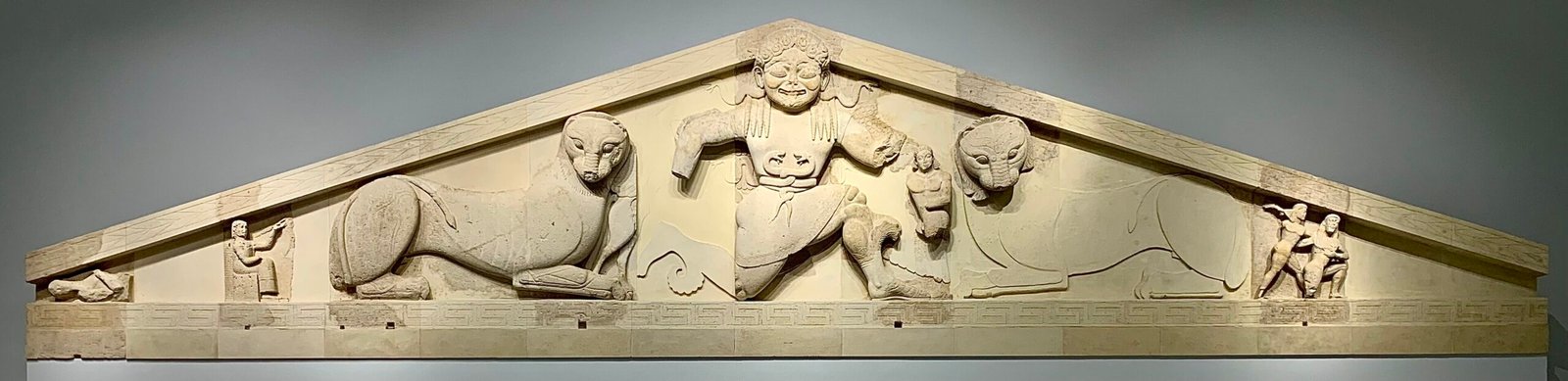
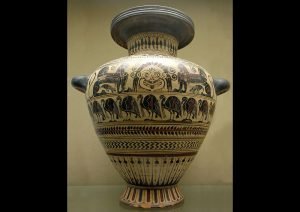
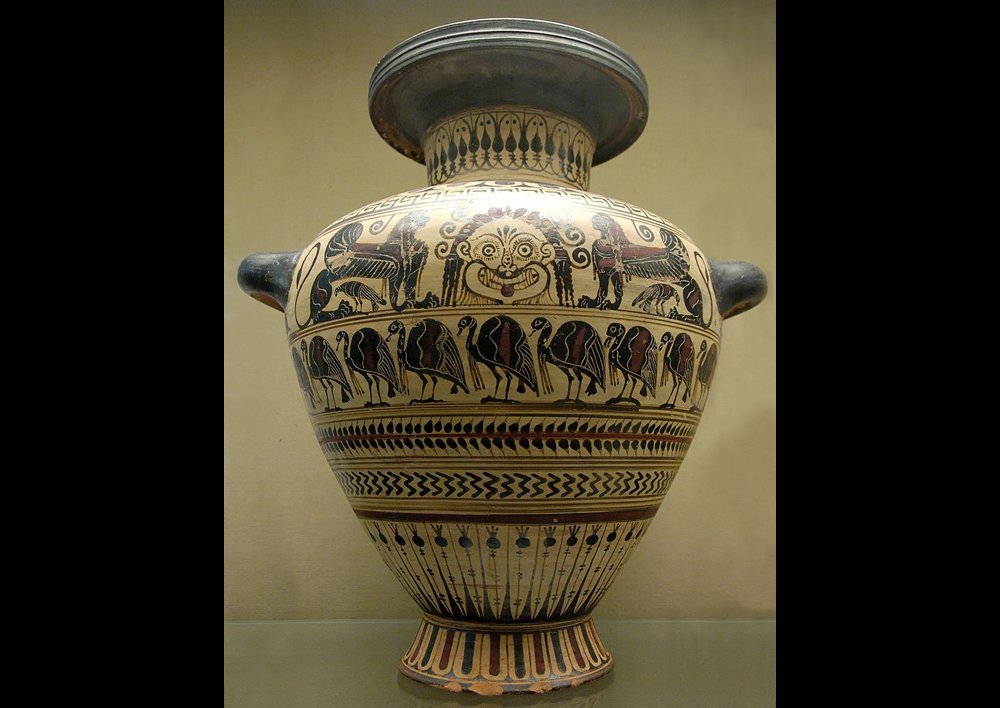
“While ancient Greek vase-painters and relief carvers imagined Medusa and her sisters as having monstrous form, sculptors and vase-painters of the fifth century began to envisage her as being beautiful as well as terrifying. In an ode written in 490 BC, Pindar already speaks of “fair-cheeked Medusa”.
In a late version of the Medusa myth, by the Roman poet Ovid (Metamorphoses 4.794–803), Medusa was originally a beautiful maiden, but when Poseidon raped her in Athena’s temple, Athena punished Medusa by transforming her beautiful hair into horrible snakes.” [read more…]
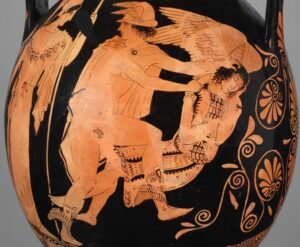
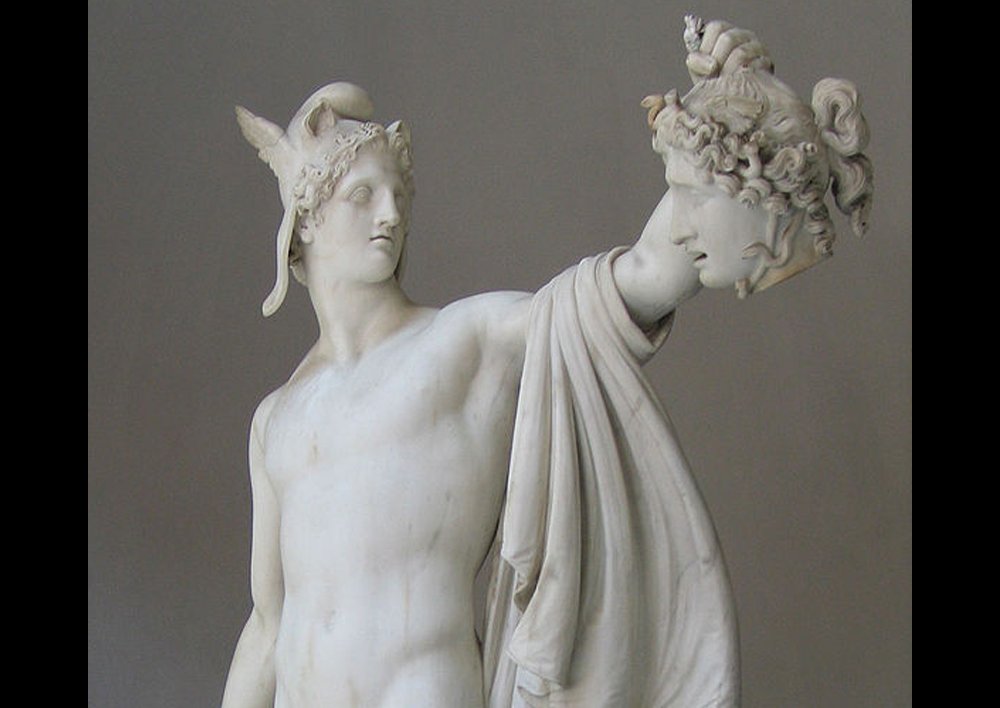
Medusa was famously beheaded by Perseus, who ironically, was trying to save his mother Danaë from being forced to marry Polydectes. Polydectes, being the ass hat that he was, sent Perseus to kill Medusa, thinking the Gorgon would kill him instead. However you divide this misogynist pie, women in ancient Greece had a sad slice of life!
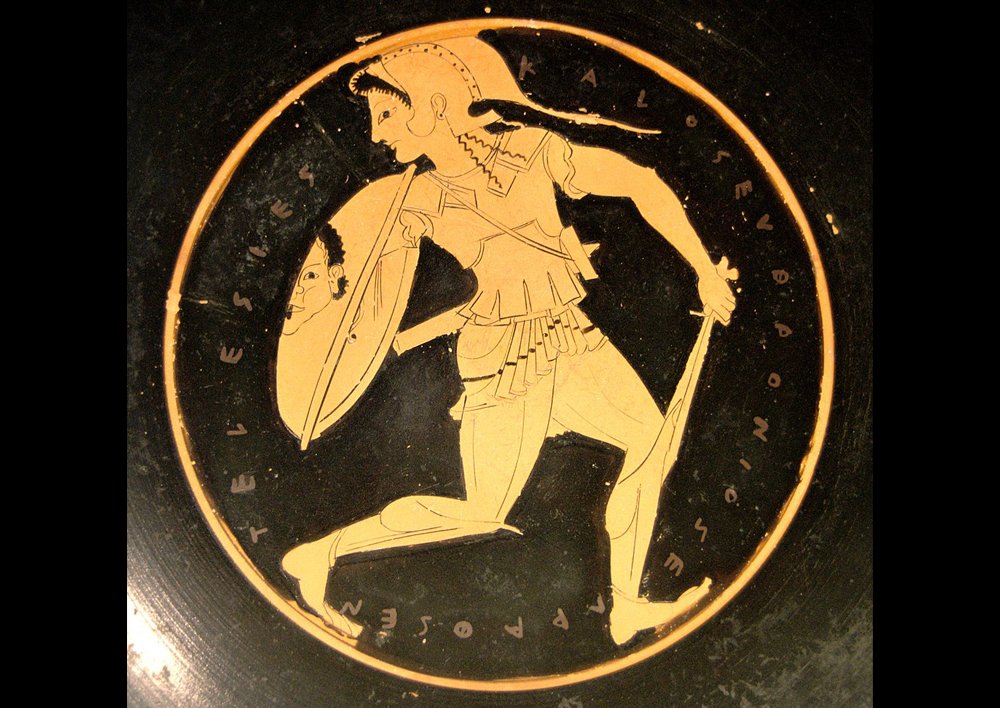
After that adventure, Perseus cut off Medusa’s head and surprise, surprise! Chrysaor and Pegasus sprung from her neck, fully formed. They were her two sons by Poseidon. Perseus took her severed head, which had the power of turning into stone all who looked upon it, saved his mom and eventually gave it to Athena, who placed it in her shield.
Medusa in Greek Mythology
Hesiod’s Theogony
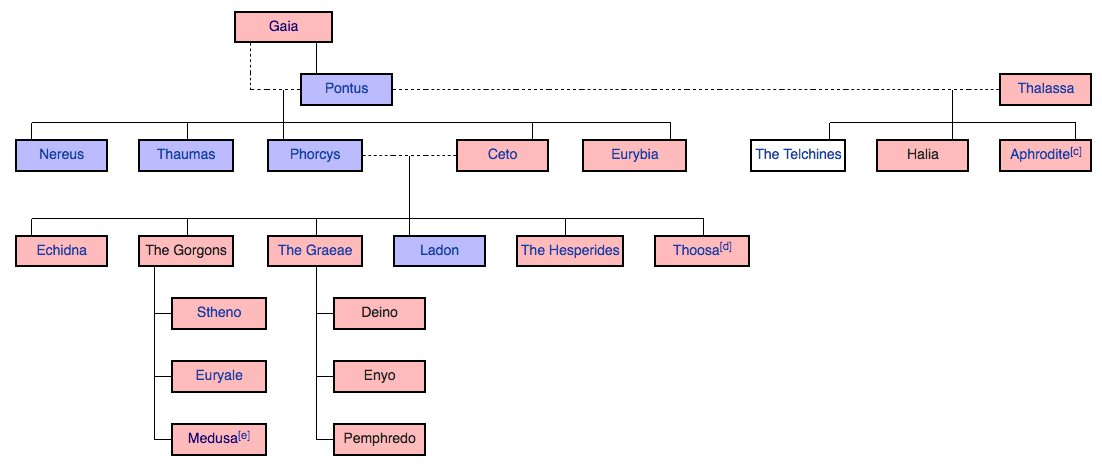
The earliest known record about the story of Medusa and the Gorgons can be found in Hesiod’s Theogony. According to Hesiod, Gaia (Earth) gave birth to Pontus (sea). Together, they produced Medusa’s parents, Phorkys and Keto (sea monsters or large sea animals). In turn, they had three daughters known as the Gorgons, but only Medusa was mortal.
“[270] And again, Ceto bare to Phorcys the fair-cheeked Graiae, sisters grey from their birth: and both deathless gods and men who walk on earth call them Graiae, Pemphredo well-clad, and saffron-robed Enyo, and the Gorgons who dwell beyond glorious Ocean in the frontier land towards Night where are the clear-voiced Hesperides, Sthenno, and Euryale, and Medusa who suffered a woeful fate: she was mortal, but the two were undying and grew not old.
With her lay the Dark-haired One in a soft meadow amid spring flowers. And when Perseus cut off her head, there sprang forth great Chrysaor and the horse Pegasus who is so called because he was born near the springs (pegae) of Ocean; and that other, because he held a golden blade (aor) in his hands.” [read more…]
Ovid’s Metamorphoses
“One of the most important sources of Roman mythology is Ovid’s Metamorphoses. This narrative poem was composed during the reign of Augustus and is considered to be one of the most influential works of literature in Western civilization. In addition, the myths in this work, which number at over 250, are regarded to be the canonical version of the Greek myths…chronicles the history of the world from its creation to the time of Julius Caesar and contains numerous myths that mirror those of the Greeks.” [read more…]
Why Was Medusa Cursed?
Although Hesiod gives an account of Medusa’s origins and the death of Medusa at the hands of Perseus, he does not say more about her. By contrast, a more comprehensive account of Perseus and Medusa can be found in Ovid’s Metamorphoses. In this work, Ovid describes Medusa as originally being a beautiful maiden. Her beauty caught the eye of Poseidon, who desired her and proceeded to ravage her in Athena’s shrine. When Athena discovered the sea god had ravaged Medusa in her shrine she sought vengeance by transforming Medusa’s hair into snakes, so that anyone who gazed at her directly would be turned into stone.” [read more…]
What Happened Between Poseidon (Neptune) and Medusa?
“Neptune is said to have violated her…” Upon close reading, Ovid’s text certainly does not say that Medusa allowed the god to violate her.
Ovid leaves unsaid what role Medusa might have played in fateful relations with Neptune. Ovid’s tacit ambivalence comes at the mid-point of his lengthy Perseus narrative in Metamorphoses Perseus, at this mid-point is regaling the wedding feast, Cepheus’ guests, with the tale of how he had come to rescue Andromeda. He ends his story abruptly (ante expectatum tacuit). One of the guests eggs him on to tell how Medusa alone of her sisters had come to have those snakey tresses. Perseus tells that Medusa once had had many suitors and the most glorious hair. “The sea-god is said to have violated her in the temple of Minerva; Jupiter’s daughter averted her eyes and covered her chaste face with her aegis; then, so as to prevent this act from going unpunished, the goddess changed the Gorgon’s hair into poisonous snakes. Even now, she wears those snakes, which she created, on the front of her chest, so as to devastate her foes with dread.”
Ovid fails in this passage to specify that Medusa might have shared some of the blame. But he doesn’t exonerate her either. I guess I had always been reading the nuance into the passage. Whether Medusa had enticed Neptune, yielded willingly to advances, or succumbed to the sea-god’s lust, Ovid leaves for the reader to infer. Clearly, though, the girl alone takes the brunt of all the goddess’ ashamed raged, and no punishment is directed at Neptune. In a mytho-theology where condign punishment is rarely measured, Ovid’s readers may likely be justified in reading Neptune’s guilt and Medusa’s innocence between these lines.” [read more…]
Ovid and Emperor Augustus
“Unlike the predominantly romantic notions of love that were “invented” in the Middle Ages, however, Ovid viewed love more as a dangerous, destabilizing force than a positive one, and demonstrates how love has power over everyone, mortals and gods alike.
During the reign of Augustus, the Roman emperor during Ovid’s time, major attempts were made to regulate morality by creating legal and illegal forms of love, by encouraging marriage and legitimate heirs, and by punishing adultery with exile from Rome. Ovid’s representations of love and its power to damage lives and societies may be seen as support for Augustus’ reforms, although the constant suggestion of the futility of controlling erotic impulses may also be seen as a criticism of Augustus’ attempt to regulate love…
It is notable that the other Roman gods are repeatedly perplexed, humiliated and made ridiculous by fate and by Cupid in the stories, particularly Apollo, the god of pure reason, who is often confounded by irrational love. The work as a whole inverts the accepted order to a large extent, elevating humans and human passions while making the gods (and their own somewhat petty desires and conquests) the objects of low humour, often portraying the gods as self-absorbed and vengeful. Having said that, though, the power of the gods remains a distinct recurrent theme throughout the poem.” [read more…]
Gorgons
Helios was the Titan-god of the sun. “Aix (Aex/Aegis) A Gorgon nymph daughter of Helios whose face was so terrifying to behold, that the ruling Titans ordered she be hidden away within the earth.” [read more…]
“Her name means both “Terrible Goat” and “Fierce Storm” for the Greek word aigis contains the double-meaning of “stormy” and “goatish”. [read more…]
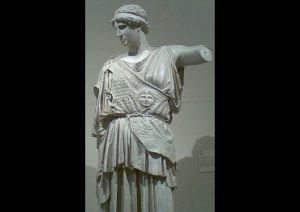
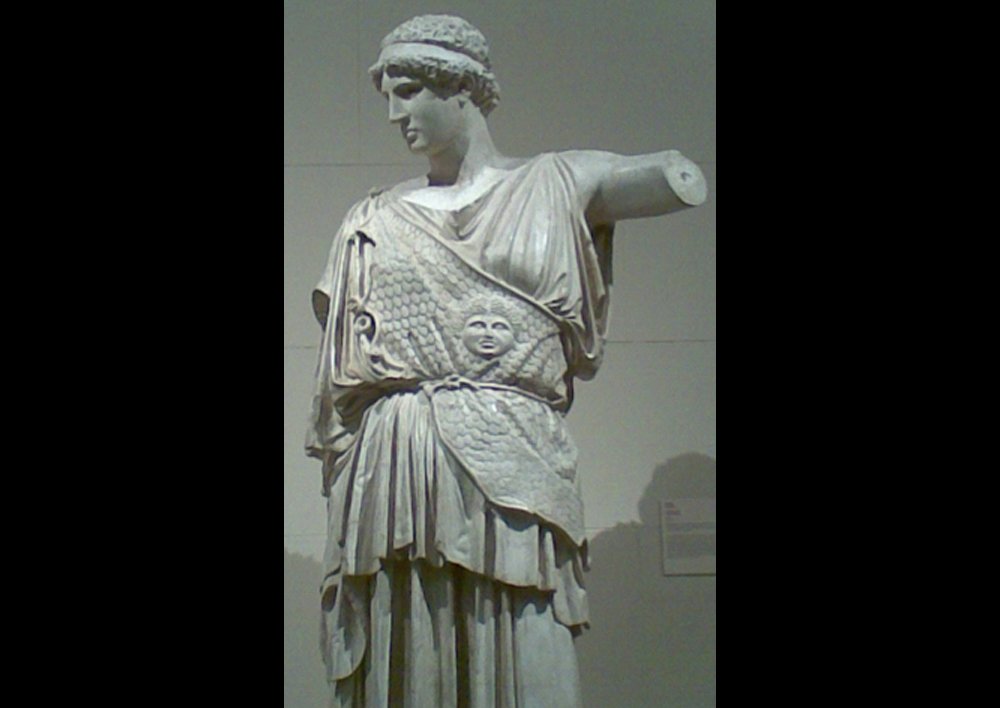
“The aegis, as stated in the Iliad, is a device carried by Athena and Zeus, variously interpreted as an animal skin or a shield and sometimes featuring the head of a Gorgon. There may be a connection with a deity named Aex or Aix, a daughter of Helios and a nurse of Zeus or alternatively a mistress of Zeus (Hyginus, Astronomica 2. 13). The aegis of Athena is referred to in several places in The Iliad.” [read more…]
“According to Pseudo-Hyginus the “Gorgo Aix” (Γοργώ Aιξ), daughter of Helios, was killed by Zeus during the Titanomachy. From her skin, a goat-like hide rimmed with serpents, he made his famous aegis, and placed her fearsome visage upon it. This he gave to Athena. Then Aix became the goat Capra (Greek: Aix), on the left shoulder of the constellation Auriga.
A primeval Gorgon was sometimes said to be the father/mother of Medusa and her sister Gorgons by the sea Goddess Ceto. This figure may have been the same as Gorgo Aix as the primal Gorgon was of an indeterminable gender.”
Genealogy
Gorgons as Protectors: Gorgoneion
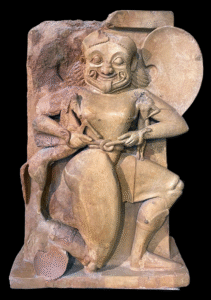
“In Ancient Greece a Gorgoneion (a stone head, engraving, or drawing of a Gorgon face, often with snakes protruding wildly and the tongue sticking out between her fangs) frequently was used as an apotropaic symbol and placed on doors, walls, floors, coins, shields, breastplates, and tombstones in the hopes of warding off evil. In this regard Gorgoneia are similar to the sometimes grotesque faces on Chinese soldiers’ shields, also used generally as an amulet, a protection against the evil eye. Likewise, in Hindu mythology, Kali is often shown with a protruding tongue and snakes around her head.
In some Greek myths, blood taken from the right side of a Gorgon could bring the dead back to life, yet blood taken from the left side was an instantly fatal poison…
Heracles is said to have obtained a lock of Medusa’s hair (which possessed the same powers as the head) from Athena and to have given it to Sterope, the daughter of Cepheus, as a protection for the town of Tegea against attack. According to the later idea of Medusa as a beautiful maiden, whose hair had been changed into snakes by Athena, the head was represented in works of art with a wonderfully handsome face, wrapped in the calm repose of death” [read more…]
Deep dive…
Learn more…
★ Metamorphoses – Ovid | Epic Poem Summary (book 4)
★ Medusa, Apollo, and the Great Mother by A. L. Frothingham (1911)
★ Medusa in Ancient Greek Art
★ Medusa and the affair with Poseidon
★ Gorgon Symbol (Gorgoneion) – History And Meaning
★ Gorgon (wiki)
★ Gorgo Aix in Greek Mythology
★ The Etruscan Chandelier (5th c BCE with gorgon in center)
★ 10 Best things to do in Cortona (see the Etruscan Chandelier!)
★ The Corfu Temple of Artemis and Medusa’s Head: What’s In Common?
★ Pegasus (Medusa’s son)
★ Chrysaor (Medusa’s son)
★ Alectryon mythology (wiki)
★ Ares, Hephaetus and Aphrodite
★ Two Eerie Medusa Heads Watch Over Turkey’s Waterways
Free comics!