
Fantastically Terrible Podcast Ep12: Whitewash (part 1) From the Trojan War to King Arthur

Listen here…
🎬 YouTube https://www.youtube.com/7Robotsinc
🎤︎︎ SoundCloud https://soundcloud.com/7robotspodcast
🎧◝(^⌣^)◜ If you enjoyed the show, give us a LIKE and SUBSCRIBE! We’ll personally thank you live on the show. We truly appreciate our listeners. After all, you don’t have to be here, but you came anyway. So, Hi! Ain’t the universe amazing?
King Memnon and the Trojan War
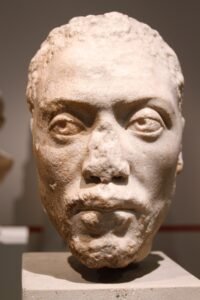
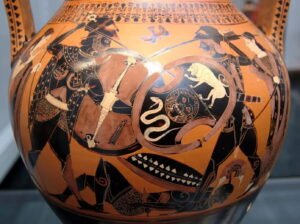
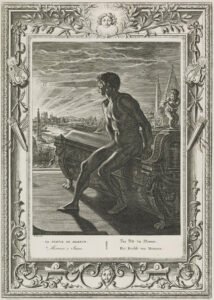

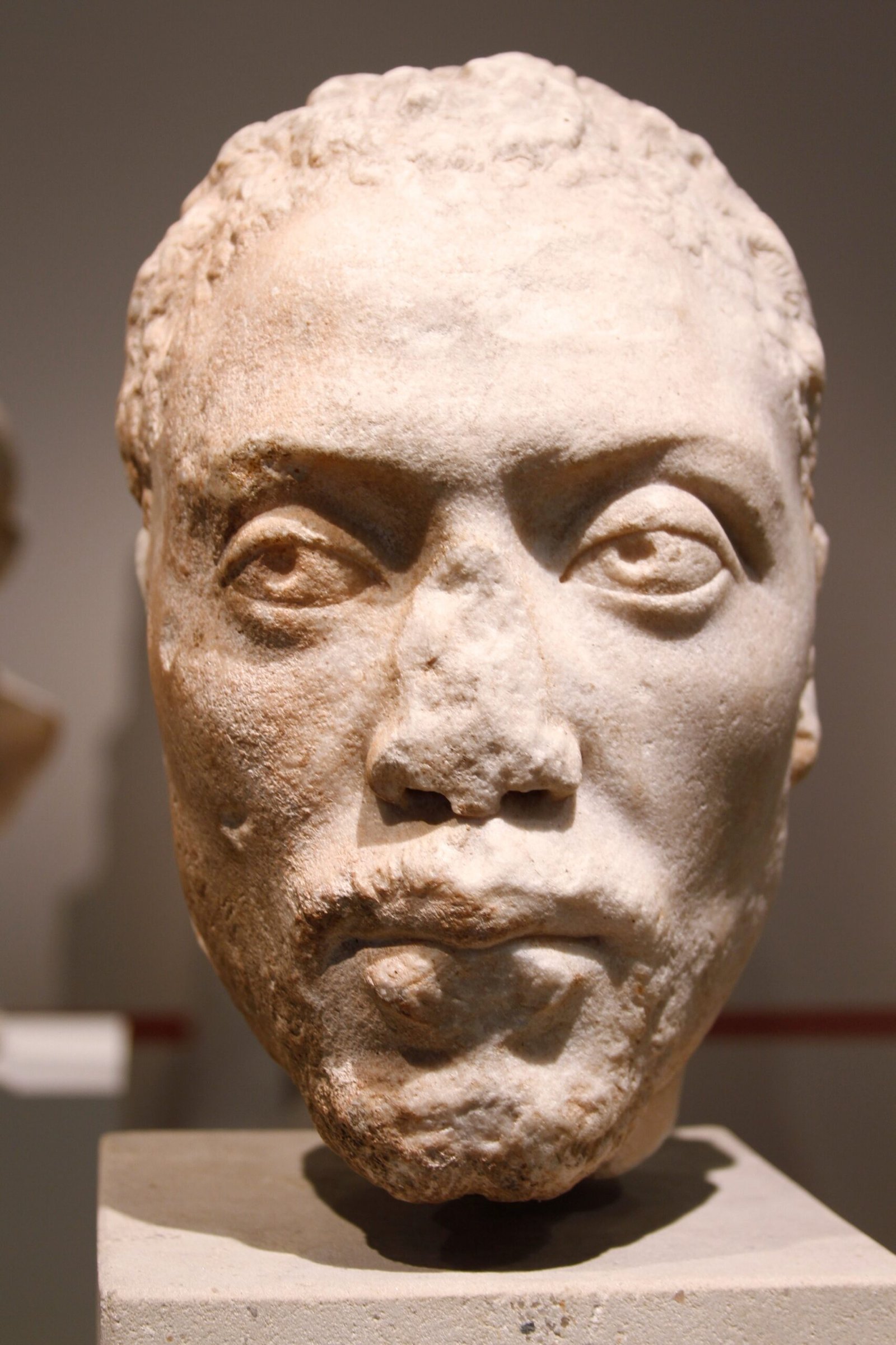
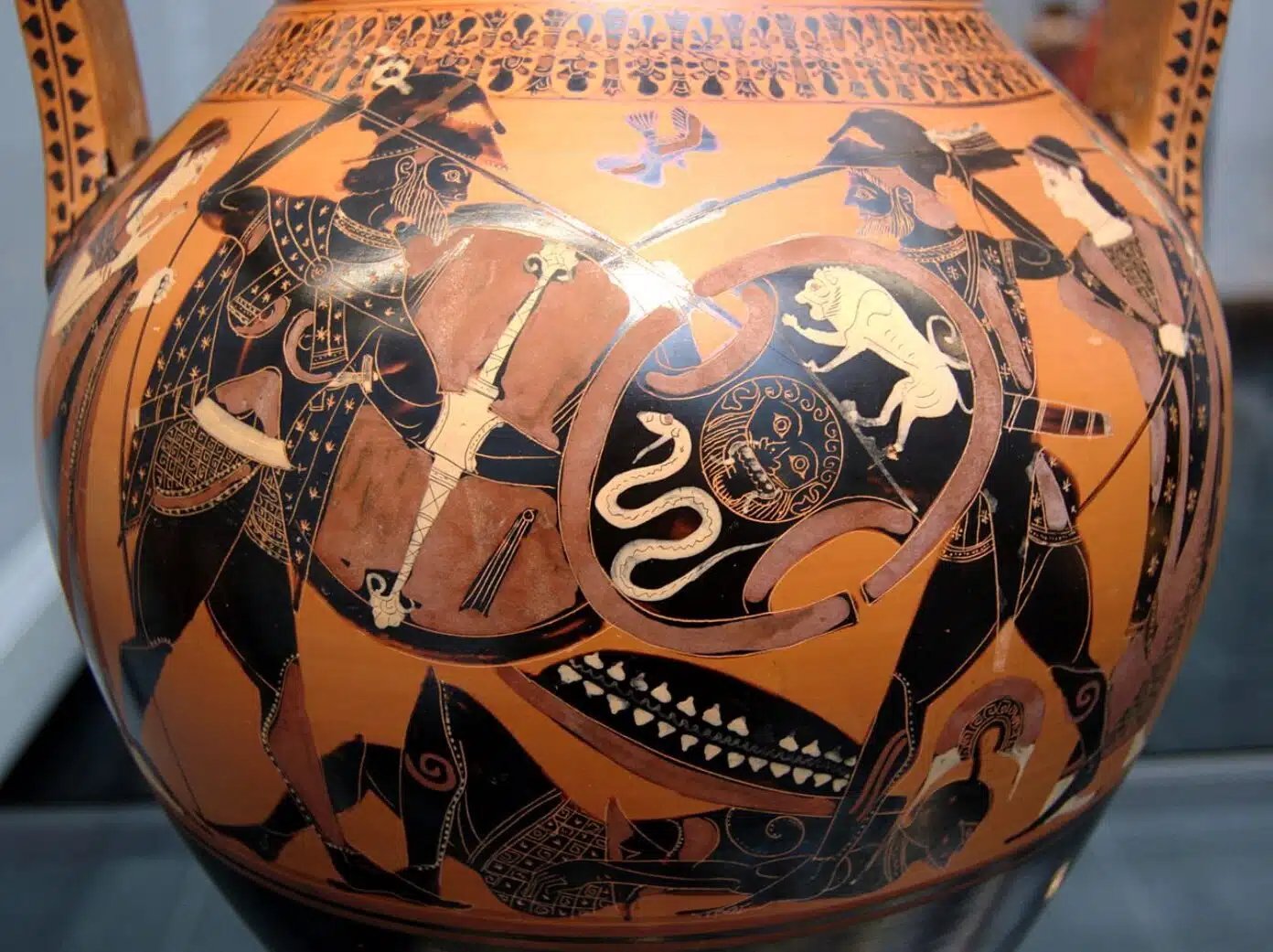

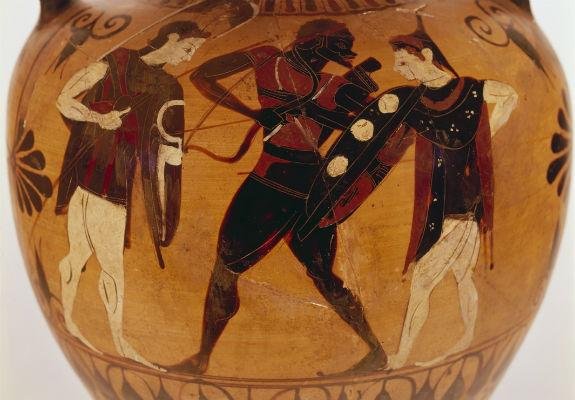
“The irony here is that black people actually do feature prominently in Greek mythology. In fact, they even feature prominently in the story of the Trojan War itself; there are several highly significant, canonically black characters in the story of the Trojan War that Troy: Fall of a City completely omitted.
The ancient Greeks told plenty of stories about the Aithiopians [Ethiopians], or “burnt-faced people,” who lived on the far edge of the world, close to where the sun rises and sets. Because of this, the ancient Greeks said their skin was burnt black by the heat of the sun. The Aithiopians were supposedly beloved by the gods and they were among the few peoples among whom the gods could walk openly.
The most famous Aithiopian in Greek mythology is Memnon, the king of Aithiopia, who was an ally of the Trojans during the Trojan War and led a massive army of Aithiopians against the Achaians. He was the son of the Trojan prince Tithonos and the goddess Eos and he wore armor that had been forged by the god Hephaistos himself. He was renowned as one of the greatest warriors who ever fought and was on par with Achilles.
Memnon was such an epic warrior that the ancient Greeks actually had an epic poem about him (well, partly about him at least) called the Aithiopis, which was five books in length and part of the so-called “Epic Cycle…
Achilles confronted Memnon of the field of battle. The heroes were evenly matched and they fought for a long time before Achilles finally stabbed Memnon through the heart with his spear, killing him. Memnon’s mother Eos, however, loved Memnon so much that she begged Zeus to bring him back to life and make him an immortal god. Zeus obliged.” [read more…]
Tithonus, Father of Memnon
“In Greek mythology, Tithonus was the lover of Eos, Goddess of the Dawn. He was a prince of Troy, the son of King Laomedon by the Naiad Strymo.” [read more…]
Laomedon
In Greek mythology, Laomedon was a Trojan king, son of Ilus. This is the father of Laomedon, his eldest legitimate and Priam, the legendary king of Troy during the Trojan War. His many children included notable characters like Hector and Paris), among others. Laomedon’s possible wives were Strymo (or Rhoeo), mother of Tithonus ,and Zeuxippe or Leucippe Priam. [read more…]
Memnon’s Tragic Death
“Despite the warning from Achilles’s mother Thesis who had a gift of divination to him not to kill Memnon, as his death will follow not long after Memnon is killed, Achilles proud and unable to resist the temptation of having to prove once and for all who was the greater warrior between himself and the great Memnon ignored the warning and still went ahead to fight him. After a prolonged battle between the two men and even though Memnon injured Achilles in the arm, Achilles pierced Memnon’s heart with his spear killing him.
Memnon’s death greatly demoralized the Trojans and his men. They made a hasty retreat back into the city where there was safety behind its walls with Achilles and his Greek countrymen in hot pursuit. In the confusion, Paris fired an arrow at Achilles from the top of the wall, according to Greek mythology the arrow was guided by Apollo the archer god and it directly struck Achilles piercing his heel, the only vulnerable spot on his body killing him, thus the phrase ‘Achilles heel’.” [read more…]
Thus it was Memnon’s death that foretold the death of Achilles. How can you cut this critical part out of the fall of Troy?
sources: Most Greek gods are Egyptian
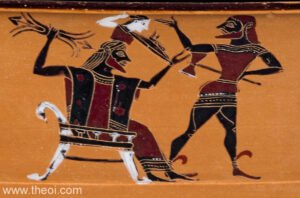
Homer THE Odyssey (Book 1)
[172] “With this, Athena touched him with her golden wand. A well-washed cloak and a tunic she first of all cast about his breast, and she increased his stature and his youthful bloom. Once more he grew dark of color, and his cheeks filled out, and dark grew the beard about his chin. Then, when she had wrought thus, she departed, but Odysseus went into the hut. And his dear son marvelled, and, seized with fear, turned his eyes aside, lest it should be a god. And he spoke, and addressed him with winged words: “Of other sort thou seemest to me now, stranger, than awhile ago, and other are the garments thou hast on, and thy color is no more the same. Verily thou art a god, one of those who hold broad heaven. Nay then, be gracious, that we may offer to thee acceptable sacrifices and golden gifts, finely wrought; but do thou spare us.” [read more…]
Plato’s Timeaus 21e-23b
“”…The subject was a very noble one; he described the most famous action in which the Athenian people were ever engaged. But the memory of their exploits has passed away owing to the lapse of time and the extinction of the actors. ‘Tell us,’ said the other, ‘the whole story, and where Solon heard the story.’ He replied—There is at the head of the Egyptian Delta, where the river Nile divides, a city and district called Sais; the city was the birthplace of King Amasis, and is under the protection of the goddess Neith or Athene. The citizens have a friendly feeling towards the Athenians, believing themselves to be related to them.” [read more…]
Egyptian Priests teach Solon about history
“Hither came Solon, and was received with honour; and here he first learnt, by conversing with the Egyptian priests, how ignorant he and his countrymen were of antiquity. Perceiving this, and with the view of eliciting information from them, he told them the tales of Phoroneus and Niobe, and also of Deucalion and Pyrrha, and he endeavoured to count the generations which had since passed. Thereupon an aged priest said to him: ‘O Solon, Solon, you Hellenes are ever young, and there is no old man who is a Hellene.’ ‘What do you mean?’ he asked. ‘In mind,’ replied the priest, ‘I mean to say that you are children; there is no opinion or tradition of knowledge among you which is white with age; and I will tell you why. Like the rest of mankind you have suffered from convulsions of nature, which are chiefly brought about by the two great agencies of fire and water. The former is symbolized in the Hellenic tale of young Phaethon who drove his father’s horses the wrong way, and having burnt up the earth was himself burnt up by a thunderbolt. For there occurs at long intervals a derangement of the heavenly bodies, and then the earth is destroyed by fire. At such times, and when fire is the agent, those who dwell by rivers or on the seashore are safer than those who dwell upon high and dry places, who in their turn are safer when the danger is from water.” [read more…]
Egyptian Priests describe the many great floods and the times before
“Now the Nile is our saviour from fire, and as there is little rain in Egypt, we are not harmed by water; whereas in other countries, when a deluge comes, the inhabitants are swept by the rivers into the sea. The memorials which your own and other nations have once had of the famous actions of mankind perish in the waters at certain periods; and the rude survivors in the mountains begin again, knowing nothing of the world before the flood. But in Egypt the traditions of our own and other lands are by us registered for ever in our temples. The genealogies which you have recited to us out of your own annals, Solon, are a mere children’s story. For in the first place, you remember one deluge only, and there were many of them, and you know nothing of that fairest and noblest race of which you are a seed or remnant. The memory of them was lost, because there was no written voice among you. For in the times before the great flood Athens was the greatest and best of cities and did the noblest deeds and had the best constitution of any under the face of heaven.’ Solon marvelled, and desired to be informed of the particulars. ‘You are welcome to hear them,’ said the priest, ‘both for your own sake and for that of the city, and above all for the sake of the goddess who is the common foundress of both our cities [Neith is Athene]. Nine thousand years have elapsed since she founded yours, and eight thousand since she founded ours, as our annals record. Many laws exist among us which are the counterpart of yours as they were in the olden time.” [read more…]
The History of Herodotus by Herodotus
50. “Moreover the naming 51 of almost all the gods has come to Hellas from Egypt: for that it has come from the Barbarians I find by inquiry is true, and I am of opinion that most probably it has come from Egypt, because, except in the case of Poseidon and the Dioscuroi (in accordance with that which I have said before), and also of Hera and Hestia and Themis and the Charites and Nereïds, the Egyptians have had the names of all the other gods in their country for all time. What I say here is that which the Egyptians think themselves: but as for the gods whose names they profess that they do not know, these I think received their naming from the Pelasgians, except Poseidon; but about this god the Hellenes learnt from the Libyans, for no people except the Libyans have had the name of Poseidon from the first and have paid honour to this god always. Nor, it may be added, have the Egyptians any custom of worshipping heroes.
51. These observances then, and others besides these which I shall mention, the Hellenes have adopted from the Egyptians; but to make, as they do, the images of Hermes with the phallos they have learnt not from the Egyptians but from the Pelasgians, the custom having been received by the Athenians first of all the Hellenes and from these by the rest; for just at the time when the Athenians were beginning to rank among the Hellenes, the Pelasgians became dwellers with them in their land, and from this very cause it was that they began to be counted as Hellenes. Whosoever has been initiated in the mysteries of the Cabeiroi, which the Samothrakians perform having received them from the Pelasgians, that man knows the meaning of my speech; for these very Pelasgians who became dwellers with the Athenians used to dwell before that time in Samothrake, and from them the Samothrakians received their mysteries. So then the Athenians were the first of the Hellenes who made the images of Hermes with the phallos, having learnt from the Pelasgians; and the Pelasgians told a sacred story about it, which is set forth in the mysteries in Samothrake.” [read more…] or [read more…]
Aristotle’s Politics (book VII: Part VII)
The Greeks were not “European” and definitely not Northern European. They consider themselves a class all their own (⸝⸝๑﹏๑⸝⸝).
“Those who live in a cold climate and in Europe are full of spirit, but wanting in intelligence and skill; and therefore they retain comparative freedom, but have no political organization, and are incapable of ruling over others. Whereas the natives of Asia are intelligent and inventive, but they are wanting in spirit, and therefore they are always in a state of subjection and slavery. But the Hellenic race, which is situated between them, is likewise intermediate in character, being high-spirited and also intelligent.” [read more…]
Andromeda
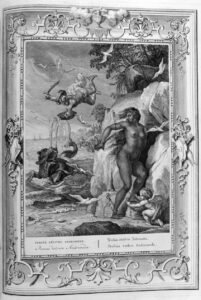
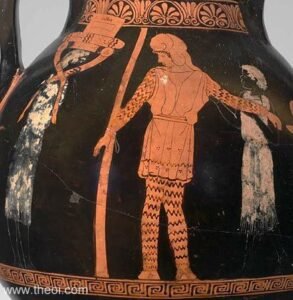
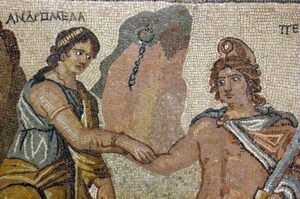
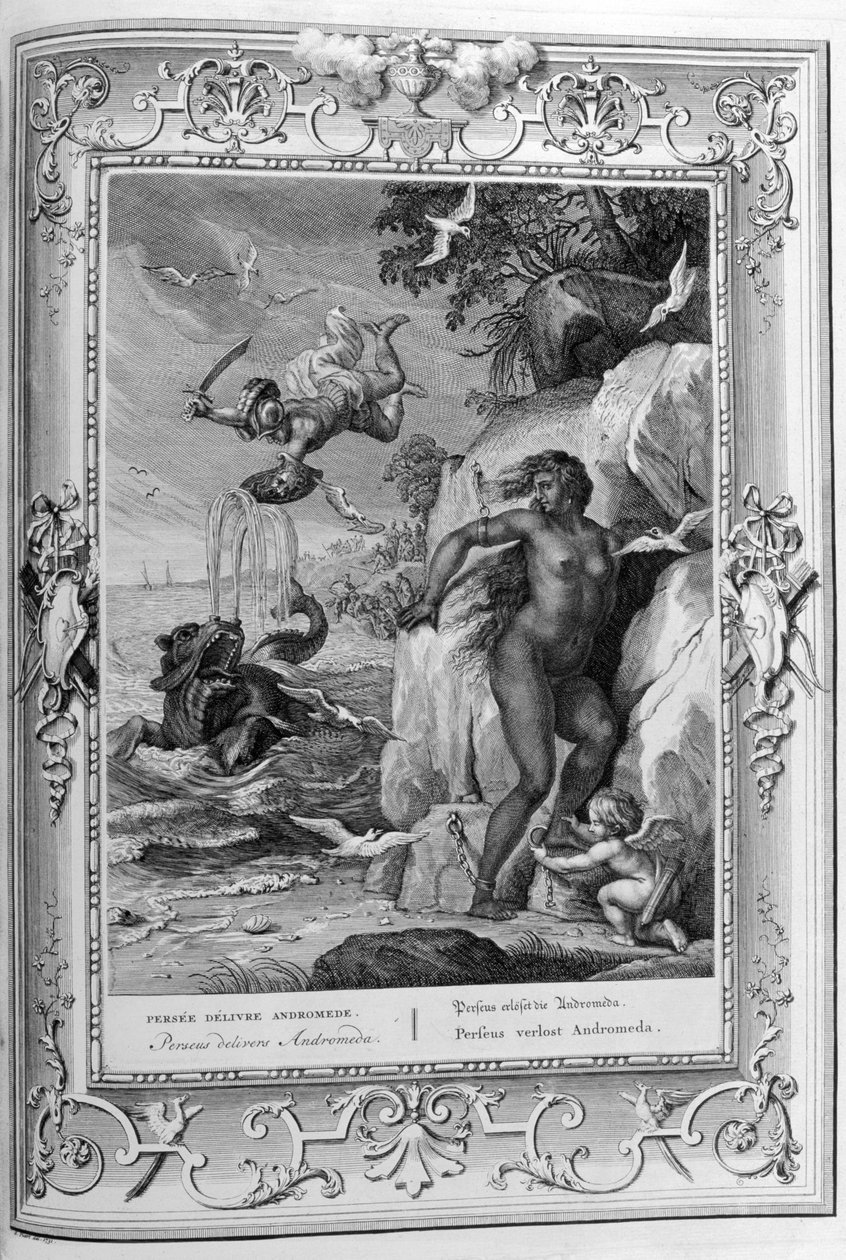
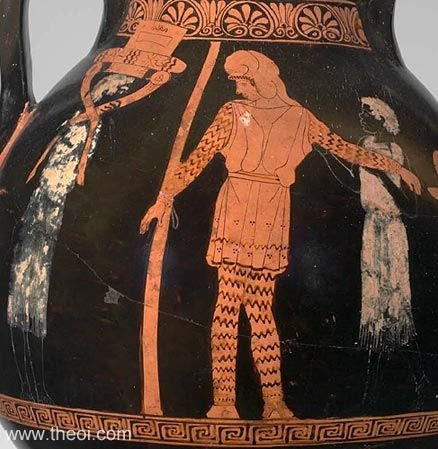
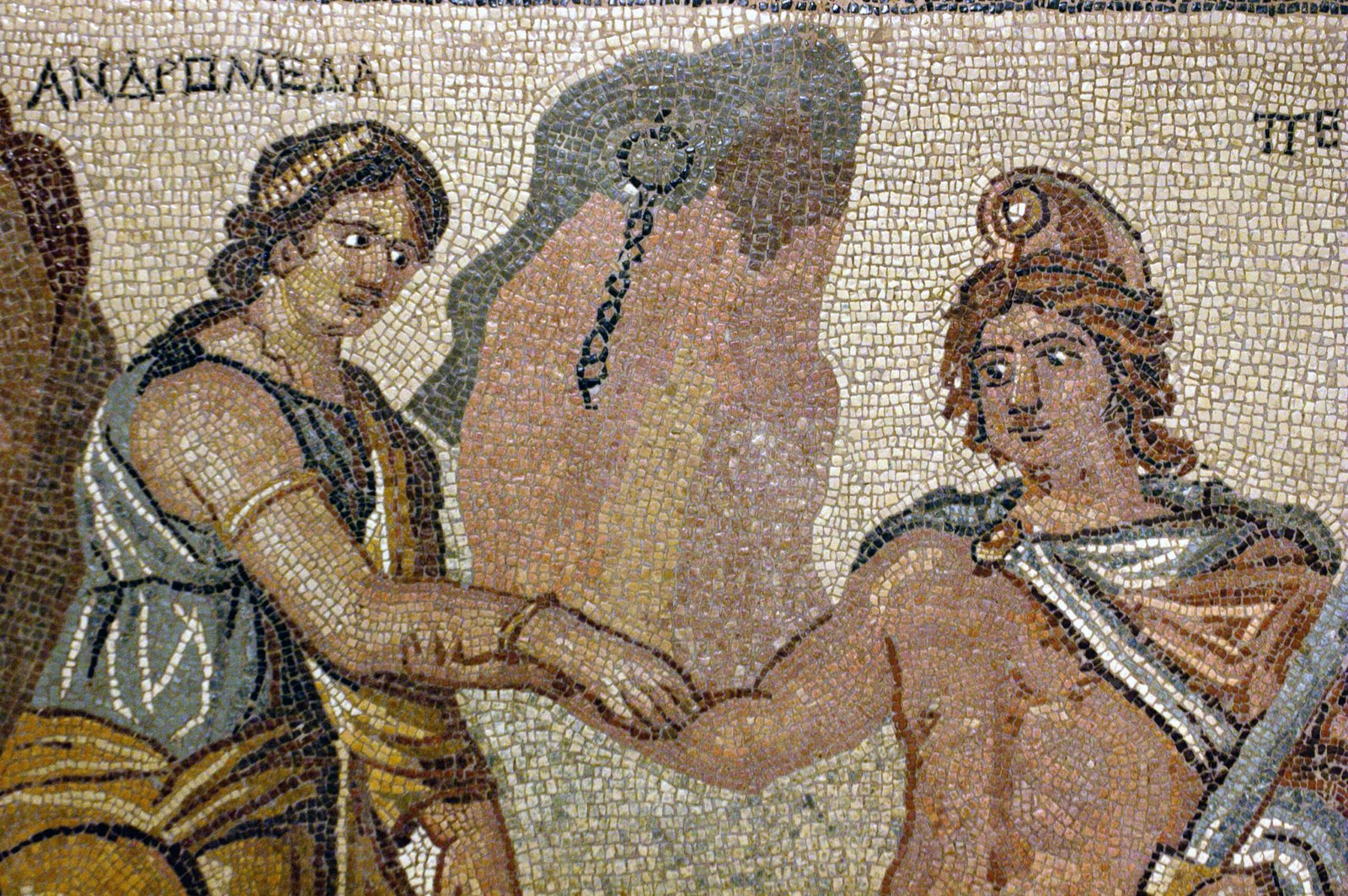
“In Greek mythology Andromeda is the daughter of Cepheus and Cassiopeia, king and queen of ancient Ethiopia. Her mother Cassiopeia foolishly boasts that she is more beautiful than the Nereids, a display of hubris by a human that is unacceptable to the gods. To punish the queen for her arrogance, Poseidon floods the Ethiopian coast and sends a sea monster named Cetus to ravage the kingdom’s inhabitants. In desperation, King Cepheus consults the oracle of Ammon, who announces that no respite can be found until the king sacrifices his daughter, Andromeda, to the monster. She is thus chained to a rock by the sea to await her death…
Perseus is just then flying near the coast of Ethiopia on his winged sandals, having slain the Gorgon Medusa and carrying her severed head, which instantly turns to stone any who look at it. Upon seeing Andromeda bound to the rock, Perseus falls in love with her, and he secures Cepheus’ promise of her hand in marriage if he can save her. Perseus kills the monster with the magical sword he had used against Medusa, saving Andromeda. Preparations are then made for their marriage, in spite of her having been previously promised to her uncle, Phineus. Andromeda was never asked for her opinion. At the wedding a quarrel takes place between the rivals, and Perseus is forced to show Medusa’s head to Phineus and his allies, turning them to stone. Andromeda follows her husband to his native island of Serifos, where he rescues his mother Danaë. They next go to Argos, where Perseus is the rightful heir to the throne.” [read more…]
“Athena promises that Andromeda will have a place in the sky after her death. When Andromeda dies, Athena keeps her promise and places Andromeda in the sky within the Andromeda constellation. The Andromeda constellation is fittingly located between the Perseus constellation and the Cassiopeia constellation.” [read more…]
Ovid: The Metamorphoses
Bk IV:663-705 Perseus offers to save Andromeda
“Leaving innumerable nations behind, below and around him, he came in sight of the Ethiopian peoples, and the fields of Cepheus. There Jupiter Ammon had unjustly ordered the innocent Andromeda to pay the penalty for her mother Cassiopeia’s words.” [read more…]
••••••••••••••••••••••••••••••••
“For much of our history, the assumption was that Western civilization, from the Greeks and Romans to the Greco-Roman architecture lining the Mall in Washington, was “of, by and for” white people, with black people playing only bit roles as nemeses to slay or servants to summon. There was a reason black people had no place in the great books of civilization, the argument went. They were and had long been considered an “unfortunate race,” a view that had “prevailed in the civilized and enlightened portions of the world at the time of the Declaration of Independence, and when the Constitution of the United States was framed and adopted,” and thus could not easily be written out, Chief Justice Roger Taney wrote in his opinion for the court in the 1857 Dred Scott decision.
As a result of this banishment from Western civilization’s foundational texts, whites felt they had justification for enslaving blacks and, later, forcing them to attend segregated schools and learn they had no history worth studying, for a day, a week or a month. All of which gave special resonance to what Du Bois himself wrote in his greatest book of all, The Souls of Black Folk, in 1903: “From out of the caves of evening that swing between the strong-limbed Earth and the tracery of stars, I summon Aristotle and Aurelius and what soul I will, and they come all graciously with no scorn nor condescension. So, wed with Truth, I dwell above the veil.”
In summoning the best of Greek and Roman literature to him, Du Bois was teaching African Americans trapped behind the color line not to view themselves as outsiders but as agents whose ancestors had played pivotal roles in the birth of the civilization now oppressing them. Yes, to him, to us, the story of Andromeda matters because it reminds us we don’t have to insert all-black casts in traditionally white stories like a reverse wood-cutting but to insist on casting them authentically based on their own underlying geography. It also teaches us that long before there was race-based slavery, black characters like Andromeda married the hero of all heroes, Perseus, son of Zeus, and were so imbued with beauty, majesty and power that they filled the sky with their heavenly glow.” [read more…]
“Black in Antiquity”: Ethiopians in the Greco-Roman Experience
“The Africans who came to ancient Greece and Italy participated in an important chapter of classical history. Although evidence indicated that the alien dark- and black-skinned people were of varied tribal and geographic origins, the Greeks and Romans classified many of them as Ethiopians. In an effort to determine the role of black people in ancient civilization, Frank M. Snowden examines a broad span of Greco-Roman experience—from the Homeric era to the age of Justinian—focusing his attention on the Ethiopians as they were known to the Greeks and Romans. The author dispels unwarranted generalizations about the Ethiopians, contending that classical references to them were neither glorifications of a mysterious people nor caricatures of rare creatures.
Mr. Snowden has probed literary, epigraphical, papyrological, numismatic, and archaeological sources and has considered modern anthropological and sociological findings on pertinent racial and intercultural problems. He has drawn directly upon the widely scattered literary evidence of classical and early Christian writers and has synthesized extensive and diverse material. Along with invaluable reference notes, Mr. Snowden has included over 140 illustrations which depict the Negro as the Greeks and Romans conceived of him in mythology and religion and observed him in a number of occupations—as servant, diplomat, warrior, athlete, and performer, among others.
Presenting an exceptionally comprehensive historical description of the first major encounter of Europeans with dark and black Africans, Mr. Snowden found that the black man in a predominantly white society was neither romanticized nor scorned—that the Ethiopian in classical antiquity was considered by pagan and Christian without prejudice.” [read more…]
Wolfram von Eschenbach (c. 1170-1220)
“Wolfram von Eschenbach, was a German poet whose epic “Parzival” (c. 1200-1210) distinguished alike by its moral elevation and its imaginative power, is one of the most profound literary works of the Middle Ages.” [read more…]
Here are some excerpts from “Parzival”, Penguin Classics (1980) edition translated by A.T. Hatto…
Gahmuret’s description of why he left Queen Belacane while she was pregnant with his child (Feirefiz)…
• “Now many an ignorant fellow may think that it was her black skin I ran away from, but in my eyes she was as bright as the sun! The thought of her womanly excellence afflicts me, for if noblesse were a shield she would be its center-piece.”
• “It seemed to Gahmuret that although she was an infidel, a more affectionate spirit of womanliness had never stolen over a woman’s heart. Her modest ways were pure baptism, as was the rail that fell on her – the flood descending from her eyes down to her sabled breast. Her pleasures in life were devotion to sorrow and grief’s true doctrine…Shew as a judge of fair complexions, too, since before this she had seen many a fair-skinned heathen. With this there was born between them a steadfast longing – she gazed at him, and he at her.”
Parzival and Feirefiz meet for the first time after a long fight…
“The Infidel [Feirefiz] was magnanimous. ‘It is clear to me, warlike man, he said, politely shaping his out to French of which he had a knowledge, ‘that you would go on fighting without your sword. But what honour would I gain from you then? Refrain, valiant warrior, and tell me who you are. I declare that had your sword not snapped you would have won my fame, all that has been accorded me over the years. Now let there be a truce between us till we have rested our limbs and recovered somewhat’.
They sat down on the grass. They were both well-bred as well as brave, while in age they were neither too old nor too young for fighting.
‘Now believe me, Knight,’ the Infidel went on to the Christian, ‘that in all my days I never saw a man more entitled to the fame one wins in battle. Condescend, sir, to tell me your name and lineage, then my voyage to these parts will have prospered.’
‘If I am to comply from hear,’ replied the sone of Herzeloyde, ‘and grant this under duress, none need trouble to ask it of me.’
‘Then I will name myself first,’ replied the Infidel of Thasme, ‘and be saddled with the reproach. I am Feirefiz Angevin, with such a plenitude of power that many lands pay tribute to me!’
Hearing these words, Parzival asked the Infidel ‘What entitles you to call yourself “Angevin”? Anjou with all its fortresses, lands and towns, is mine by inheritance. Sir, I pray you, choose another style. If I am to lose my lands and the noble city of Bealzenan, you you will have done me violence. If either of us is an Angevin, I claim by true descent I am he! Nevertheless, I have been told for a fact that there is a fearless warrior living in the heathen lands who has won love and fame with chivalric exploits, and is called my brother. Those people have given him the palm. Now sir,’ continued Parzival, ‘once I had seen your features I would tell you if you are the one described to me. If you will go with me that far, sir, bare your head…’
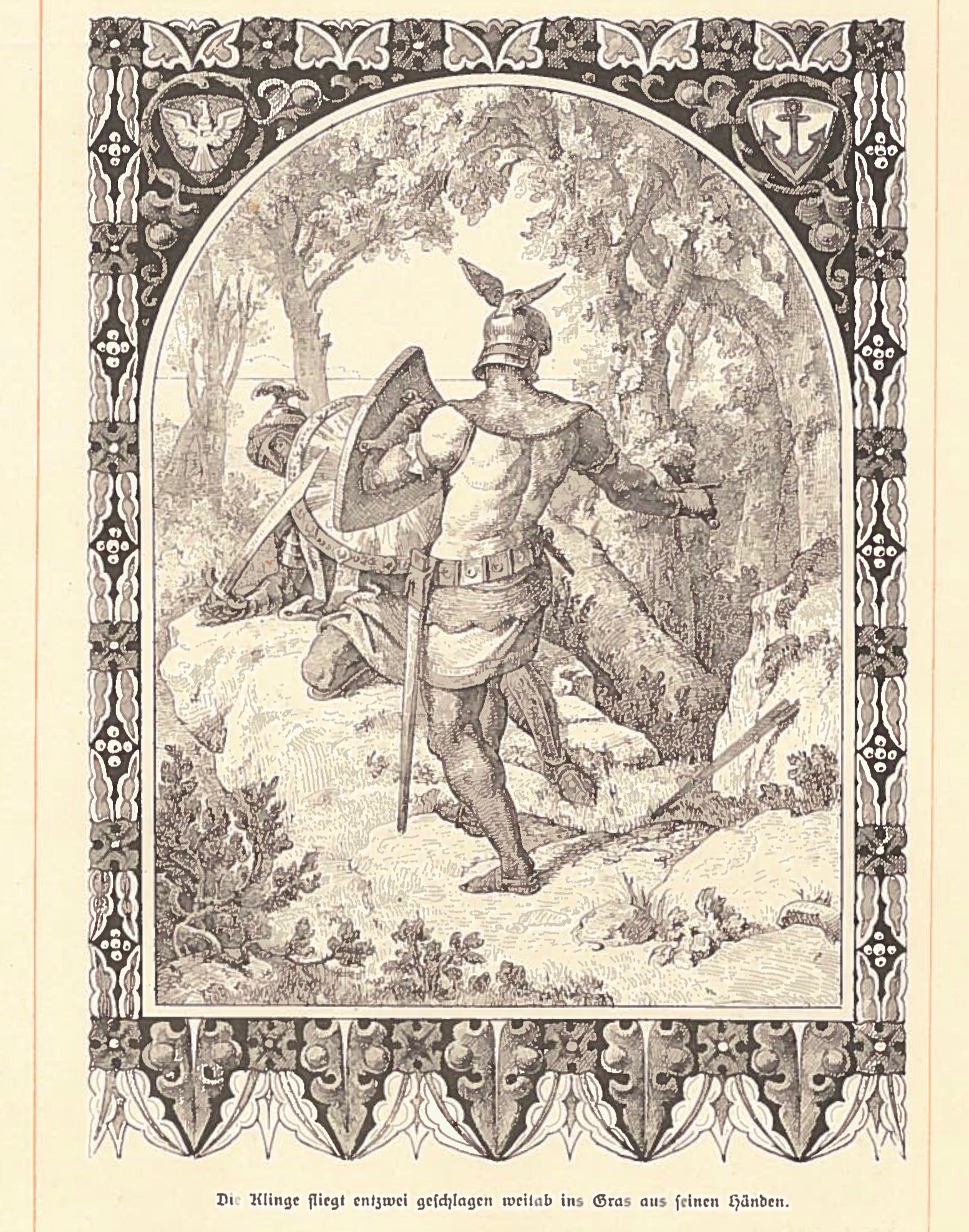
The gallant, mighty Infidel evinced a manly bent, for with a ‘This sword shall belong to neither of us!’ the fearless knight flung it far out into the forest. ‘If there’s to be any fighting here,’ he added, ‘even chances must prevail. Now, sir, by the care that formed your breeding, since it seems you have a brother, tell me what he looks like,’ said the mighty Feirefiz, ‘Describe his face to me and what sort of complexion they named to you.’
‘It is like a parchment, with writing,’ answered Herzeloyde’s son, ‘black and white, in patches. That is how Ekuba described him to me.’
‘I am he,’ replied the Infidel.
Neither wasted any time. They at once bared their heads of their helmets and coifs. Parzival found treasure trove, the most precious he had ever lit on. The Infidel was recognized immediately for he was marked like a magpie. Feirefiz and Parzival ended their strife with a kiss. It was more fitting for them to be friends than bitter enemies. Their contest was settled by loyalty and affection.”
Meeting Gawan/Gawain (King Arthur’s nephew and a Knight at the Round Table)…
“Feirefiz’s armour was removed. They gazed at this mottled man, and all who liked to talk of marvels had ocular proof of one there – Feirefiz ‘s skin was strangely patterned!
‘Make me acquainted with your companions, Cousin’ said Gawan to Parzival. ‘He looks so dazzlingly elegant, I never saw anything like it.’
‘If I am your kinsman,’ Parzival answered his host, ‘then so is he. Let Gahmuret assure you of that. This is the King of Zazamanc, where my father so gloriously won Belacane, who bore this knight.’
Gawan duly kissed the Infidel. Mighty Feirefiz was black and white all over his skin, except that about half his mouth showed red.
Luxurious clothes were brought for them from Gawan’s wardrobe. And now fair ladies were arriving. The Duchess had Cundrie and Sangive kiss him first, then she and Arnive kissed him. Feirefiz was delighted to see such lovely women…
‘Cousin,’ said Gawan to Parzival, ‘your helmet and shield tell me of new hardship you have undergone. You and your brother have both had to bear the brunt of battle. From who did you get such cruel treatment?’…”
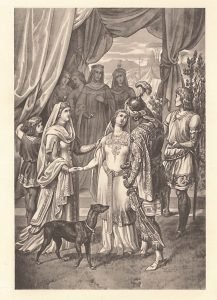
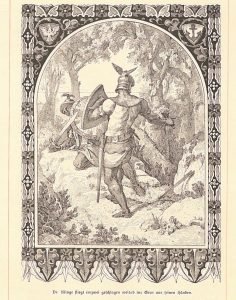
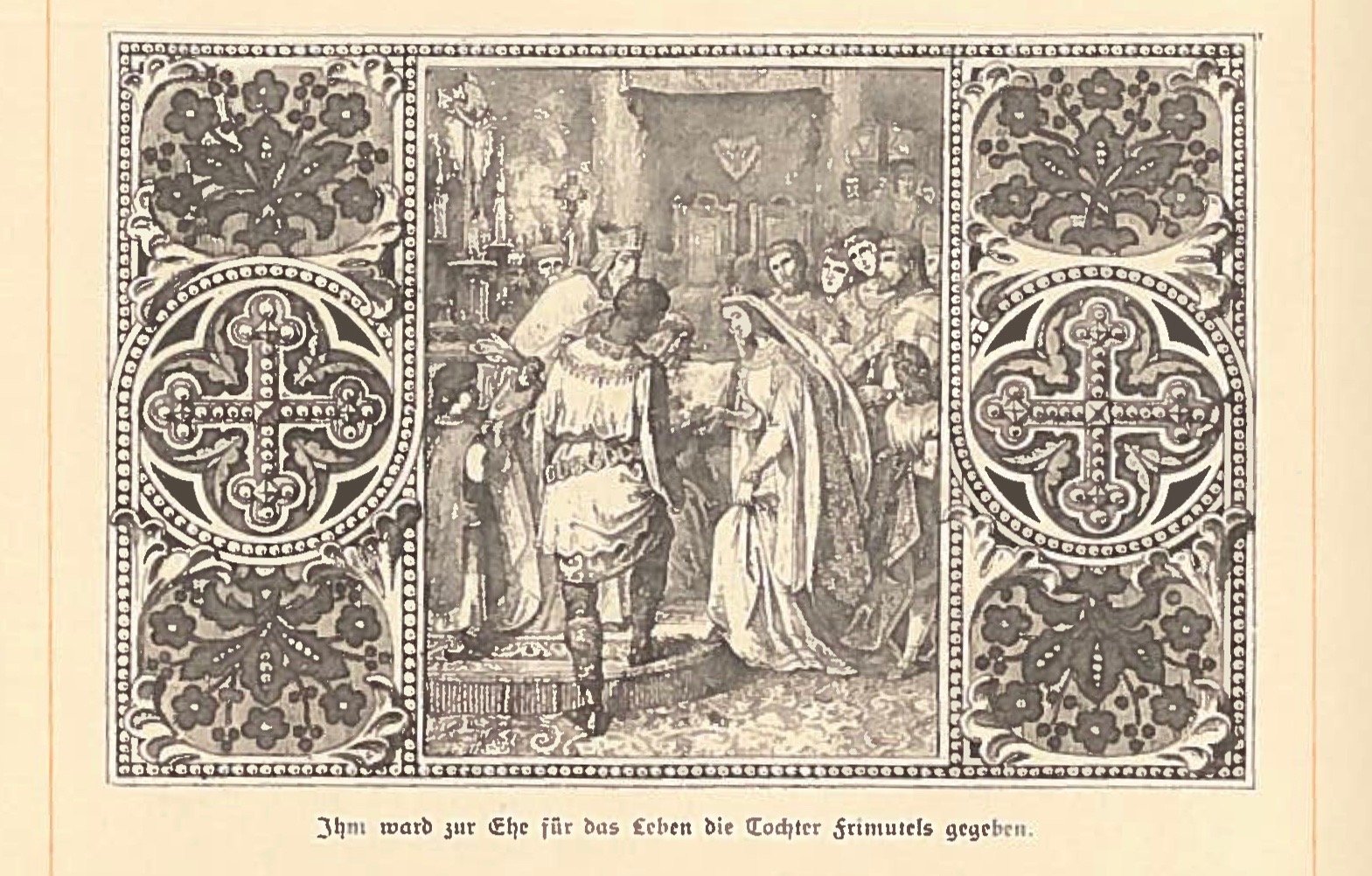
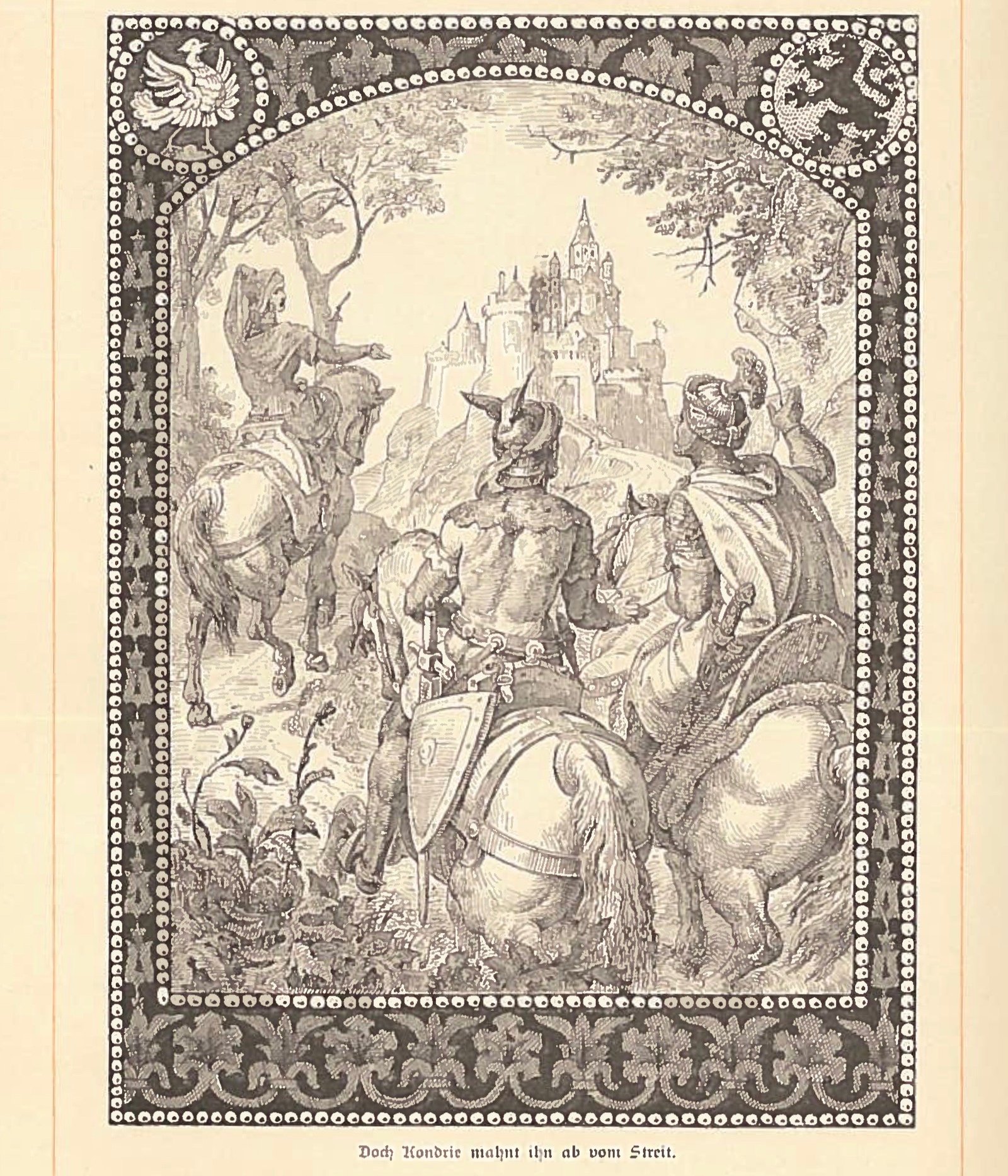
Depicting Feirefiz in the age of empire (1888)
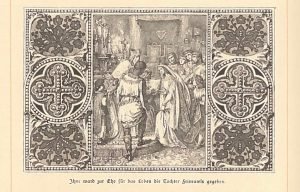
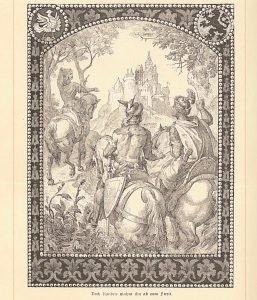
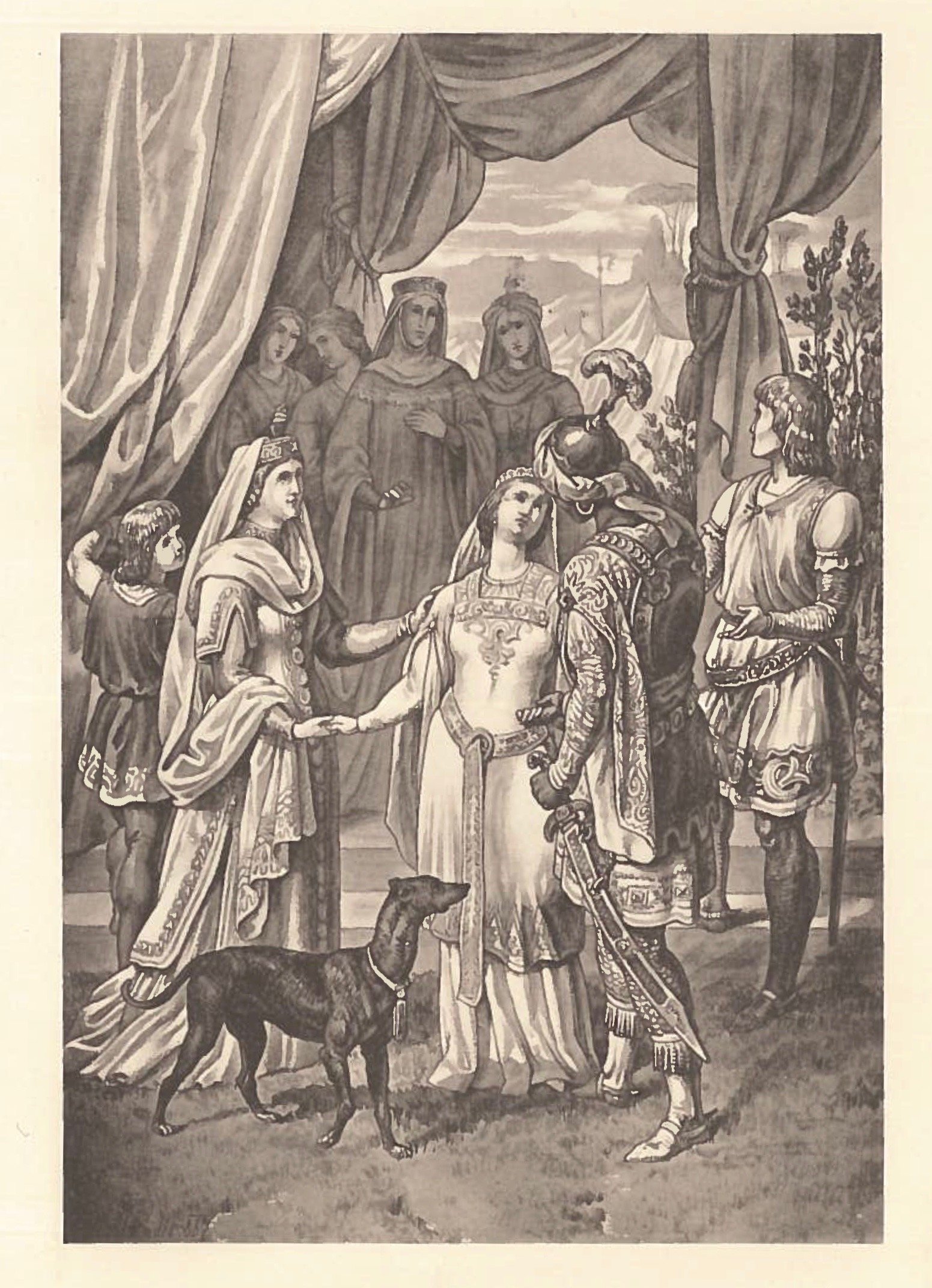
“These images are taken from Engelmann’s 1888 illustrated children’s version of Parzival. Engelmann does not include Belkane in his version, but he does introduce Feirefiz at the end of the tale, when he comes to Christian Europe in search of his father but instead encounters his half-brother Parzival. Contrary to what one might expect, the book and its images do not directly reflect the racism of the colonial era but instead reflect more the sentiment of the medieval text…
Nevertheless, it is important to note that Feirefiz is not depicted as characteristically different from the other knights; as they do with other white knights, courtly women swoon over him, and one image shows him marrying the white Repanse. In this image their white and Black hands meet clearly in the center of the image as a sign of their union. Like the medieval text, Engelmann’s version of the story depicts Feirefiz as an ‘honourable heathen’ and does not describe him in otherwise derogatory language.
The images and corresponding text of Engelmann’s Parzival exemplify a continuity between the depictions of the medieval period and the colonial period which may seem surprising, especially considering other artistic representations of the Parzival text from the late nineteenth century. For example, Wagner’s erasure of Black characters from his 1882 Parsifal is perhaps the result of Wagner’s known racism. A painting of Parzival and Feirefiz in Neuschwanstein castle, on the other hand, depicts Feirefiz as lighter-skinned—perhaps as Middle Eastern and Muslim—with barely visible black spots on his face. Engelmann’s depictions thus stand out. They are possible because Engelmann remains close to a text predating the era of scientific racism and its subsequent visual and literary depictions.” [read more…]
Acts of the Apostles
The Conversion of the Ethiopian (Acts 8:26-40)
26 “But an angel of the Lord spoke to Philip saying, “Arise and go south to the road that descends from Jerusalem to Gaza.” (This is a desert road.)
27 And he arose and went; and behold, there was an Ethiopian eunuch, a court official of Candace, queen of the Ethiopians, who was in charge of all her treasure; and he had come to Jerusalem to worship. [Thus, he was an Ethiopian Jew]
28 And he was returning and sitting in his chariot, and was reading the prophet Isaiah.
29 And the Spirit said to Philip, “Go up and join this chariot.”
30 And when Philip had run up, he heard him reading Isaiah the prophet, and said, “Do you understand what you are reading?”
31 And he said, “Well, how could I, unless someone guides me?” And he invited Philip to come up and sit with him.
32 Now the passage of Scripture which he was reading was this: “HE WAS LED AS A SHEEP TO SLAUGHTER; AND AS A LAMB BEFORE ITS SHEARER IS SILENT, SO HE DOES NOT OPEN HIS MOUTH.
33 “IN HUMILIATION HIS JUDGMENT WAS TAKEN AWAY; WHO SHALL RELATE HIS GENERATION? FOR HIS LIFE IS REMOVED FROM THE EARTH.”
34 And the eunuch answered Philip and said, “Please tell me, of whom does the prophet say this? Of himself, or of someone else?”
35 And Philip opened his mouth, and beginning from this Scripture he preached Jesus to him.
36 And as they went along the road they came to some water; and the eunuch said, “Look! Water! What prevents me from being baptized?”…
38 And he ordered the chariot to stop; and they both went down into the water, Philip as well as the eunuch; and he baptized him.
39 And when they came up out of the water, the Spirit of the Lord snatched Philip away; and the eunuch saw him no more, but went on his way rejoicing.
40 But Philip found himself at Azotus; and as he passed through he kept preaching the gospel to all the cities, until he came to Caesarea.” [read more..]
Moses Ethiopian Wife (Numbers 12:1)
“In Numbers 12:1 Moses is condemned by his sister Miriam and his brother Aaron “because of the Cushite woman whom he had married”; and the narrator immediately adds by way of needed explanation, “for he had married a Cushite woman” (‘ishshah khushith). Views regarding this person have been of two general classes:
(1) She is to be identified with Zipporah (Exodus 2:21 and elsewhere), Moses’ Midianite wife, who is here called “the Gushite,” either in scorn of her dark complexion (compare Jeremiah 13:23) and foreign origin (so most older exegetes), or as a consequence of an erroneous notion of the late age when this apocryphal addition, “because of the Cushite,” etc., was inserted in the narrative (so Wellhansen).
(2) She is a woman whom Moses took to wife after the death of Zipporah, really a Cushite (Ethiopian) by race, whether the princess of Meroe of whom Josephus (Ant., II, x, 2) romances (so Targum of Jonathan), or one of the “mixed multitude” (Exodus 12:38; compare Numbers 11:4) that accompanied the Hebrews on their wanderings (so Ewald and most). Dillmann suggests a compromise between the two classes of views, namely, that this woman is a mere “variation in the saga” from the wife elsewhere represented as Midianite, yet because of this variation she was understood by the author as distinct from Zipporah. The implication of the passage, in any case, is clearly that this connection of Moses tended to injure his prestige in the eyes of race-proud Hebrews, and, equally, that in the author’s opinion such a view of the matter was obnoxious to God.” [read more…]
What isn’t immediately obvious in scripture is that Moses had two wives and Zipporah was the first. This is actually a topic that is debated often, but scripture is clear that Moses married two different women from two different lineages. We can prove that by tracing their lineages in scripture. [read more…]
Moses’ second wife is unnamed and referred to as an Ethiopian in the KJV and a Cushite in most other translations (Numbers 12:1). Cushites were descendants from the line of Ham through his son Cush.
Zipporah was a descendant of Abraham’s son Midian, who was born to Keturah. Ketrah was Abrham’s third wife. This means that Zipporah is a descendant of the line of Shem (Genesis 25:1-2).
Learn more…
Greek Mythology
★ Memnon: the African warrior who made Achilles bleed; what the film Troy left out
★ Scholars Respond to Racist Backlash against Black Achilles, Part 2: What did Achilles look like?
★ Ovid: The Metamorphoses
★ “Black in Antiquity” Ethiopians in the Greco-Roman Experience
★ Andromeda
★ Andromeda constellation
★ Dutch Art: Mythology and the Aethiopes, or Ethiopians
Biblical
★ Moses Ethiopian Wife Zipporah (Numbers 12:1)
★ The Conversion of the Ethiopian (Acts 8:26-40)
★ King of Solomon Legend
★ Queen of Sheba: Midrash and Aggadah
★ The Queen of Sheba: King Solomon’s Ethiopian Mistress
★ Church Unearthed in Ethiopia Rewrites the History of Christianity in Africa
Medieval
★ Wolfram von Eschenbach (c. 1170-1220)
★ Parzival vol. I (pdf)
★ Not All the Knights of the Round Table Were White
★ Feirefiz (wiki)
★ Black Central Europe. 1000 years of Black history in the German-speaking lands
★ Parzival (wiki)
★ Black Knights, Green Knights, Knights of Color All A-Round: Race and the Round Table
★ 8 Stunning Images of Black People In Medieval Europe
African Empires
★ Blacks in Antiquity: Ethiopians in the Greco-Roman Experience
★ Mali Empire: This 14th-Century African Emperor Remains the Richest Person in History
★ Mansa Musa King of Mali Empire (1312 – 1337)
★ Mansa Musa | 10 Facts About The Richest Man In History
★ Rediscovering Ancient Nubia Before It’s Too Late: Long ignored by white researchers, modern archaeologists are now racing to document the ancient African civilization.
★ Timeline of Etheopian Empire
★ West African Empires (c.100 CE – 1599 AD)
★ Nubian Archers: Nubia was the “Land of the Bow”
★ A Hidden History: The West African Empires Before the Atlantic Slave Trade
★ Enlightenment, Scientific Racism and Slavery : A Historical Point by Dave Foutz (quotes from Voltaire and others)
trying to remove Ancient Egypt from Africa
★ Race theory, Racism and Egyptology
★ DNA from Kemet: does it really have all of the answers?
More information on real history
★ People of Color in European Art History
★ How black women were whitewashed by art
★ Black Tudors: The Untold Story
★ “Revealing the African Presence in Renaissance Europe” (book pdf)
Free comics!